

A Traffic Source I Didn’t Expect
When I first started blogging, I expected traffic to come from familiar places — Google, Pinterest, maybe Medium. I focused on writing helpful content, structuring it for SEO, and sharing it where I could. But one day, while browsing through Google Analytics, something caught my eye: a few users had landed on my blog from a referral source I had never targeted — ChatGPT.
Yes, ChatGPT. The same tool I often use for brainstorming, outlining, or checking ideas was now bringing actual readers to my site. And I hadn’t even clicked my own links.
That moment changed how I think about discoverability, relevance, and content design.
Where Blog Traffic Usually Comes From

Most bloggers focus on three core channels:
- Search engines (Google, Bing)
- Social platforms (Pinterest, Instagram, Twitter)
- Email lists
These methods work well, but they all require constant effort: pinning, posting, sharing, pitching. What if your content could quietly be working for you — showing up in helpful responses, without you even knowing?
What Happened: ChatGPT as a Free Traffic Source
In my Analytics dashboard, under Acquisition > Traffic Acquisition, I noticed a referral listed as:
chat.openai.com / referralThe visitor had spent time reading my post, clicked around, and even subscribed. I knew it wasn’t me, and it wasn’t someone I had directly sent the link to.
The only explanation? Someone else had asked ChatGPT a question, and it had offered my blog post as a helpful link in the response. They clicked, visited, and stayed. That’s when I realized: ChatGPT had become a silent traffic partner.
How ChatGPT “Finds” and Recommends Content
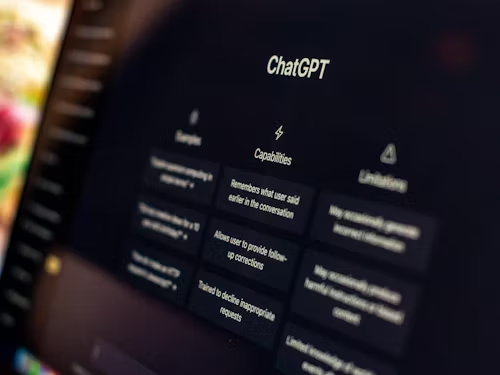
Although ChatGPT doesn’t crawl the web live, it can suggest links and refer to indexed content that has been trained into the system or added through browsing tools. When a user asks a question, the model responds with useful summaries, and occasionally, it includes links if it considers them helpful.
So, what makes a blog post “helpful” enough to be suggested?
1. Clear, Focused Topics
If your content directly answers a specific question (e.g., “Best sunscreen for acne-prone skin”), it has a much higher chance of being referenced.
2. Structured Formatting
Using subheadings (H2s and H3s), lists, and clear sections makes it easier for any tool or human to extract relevant information.
3. Authentic Voice
Real, relatable content stands out. When you write from experience and add thoughtful commentary, it resonates better than generic summaries.
4. Strong SEO Basics
Your posts still need to be optimized: title tags, meta descriptions, internal linking, and keyword usage all matter.
YOU MAY ALSO LIKE: PINCLICKS REVIEW-BOOST YOUR BLOG TRAFFIC
How to Increase the Chance of Being Referenced
If you want your blog content to potentially show up in AI-generated responses and reach unexpected audiences, here are a few simple strategies:
1. Use Specific Questions as Subheadings
For example:
- “Is The Ordinary SPF good for oily skin?”
- “What perfumes last long in summer heat?”
These match natural queries people actually ask.
2. Include Concise Bullet Points
Answer questions in summary form:
- Non-comedogenic
- No white cast
- Lightweight texture
- Broad spectrum SPF 45
This makes your content easier to skim, quote, and refer to.
3. Link Internally
Show that your blog is a web of useful information. When one post links naturally to others, it adds credibility and increases session time.
4. Keep Content Updated
Make sure product links, statistics, and recommendations are fresh. If your post still says “Top Picks for 2022,” it won’t age well.
Real-Life Example From My Blog

One of my most visited posts is a review of The Ordinary SPF 45 Serum. I formatted the post with a clear structure:
- Introduction with personal experience
- H2 subheadings answering common questions
- Pros and cons in bullet points
- Honest final verdict
Without promoting it actively, the post received visits from ChatGPT referrals. That means someone else asked for a product recommendation — and my post was used to help answer that.
Another example is my post about summer perfumes. Since it contains clear product breakdowns, notes, and user impressions, it’s easy to reference for queries like “best fresh summer perfumes for women.”
YOU MAY ALSO LIKE:Best Social Media Strategies for Small Beauty Brands
This Traffic Is Real, And It Matters
When traffic comes from search or social, you expect some bounce. But traffic coming from a tool like ChatGPT is often:
- Highly targeted (they came for a very specific reason)
- Longer session duration (because the recommendation was relevant)
- More engaged (scrolling, clicking, subscribing)
That makes this type of referral especially valuable.
Final Thoughts: Why This Matters for Bloggers
You don’t have to “game” the system. Just by creating high-quality, clear, helpful blog content, you open the door for your posts to be shared and recommended — even in places you don’t control.
Tools like ChatGPT are reshaping how people discover content. If your blog posts are optimized, honest, and informative, they may find new life in someone else’s question — and you won’t even know until you see it in Analytics. How to Optimize Blog Posts for SEO
It’s a small but powerful reminder: every piece of content you create has the potential to travel farther than you planned.
Ready to try it yourself? Review your most helpful posts. Add a few subheadings in the form of questions. Break down the answers. And then check back in a month. You might be surprised where your traffic starts coming from next.
FAQ: ChatGPT as a Free Traffic Source
1. How does ChatGPT drive traffic to a blog?
When users ask ChatGPT questions, it sometimes provides helpful links in its responses. If your content answers that specific query clearly and effectively, ChatGPT may include your post — and users can click through to your site.
2. Is this traffic consistent?
It’s not always consistent, but it can grow over time as your content gains more authority, structure, and relevance to common search queries.
3. Do I need to pay or submit my blog somewhere?
No. ChatGPT recommends publicly available content based on relevance. You don’t need to pay, apply, or list your blog anywhere.
4. How do I know if I’m getting traffic from ChatGPT?
Check your Google Analytics under Acquisition > Traffic Acquisition. Look for “chat.openai.com / referral” as a source.
5. Can I optimize my blog for ChatGPT?
Yes. Use question-based headings, keep answers clear and useful, and update content regularly. This improves your chances of being referenced in answers.
Written by a blogger who’s constantly amazed by where the internet can take us.